
Sauce Blog
Lunchbox vs Sauce
January 26, 2026
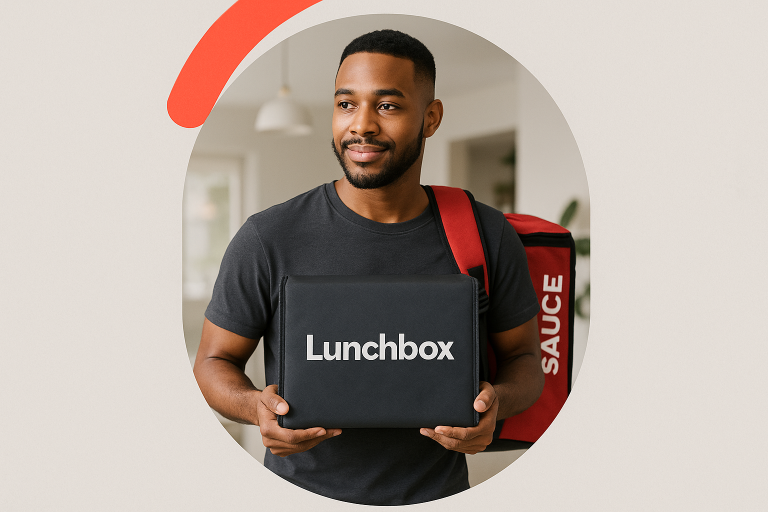
Lunchbox Vs Sauce
Overview
Choosing the right online ordering platform can make or break a restaurant's profitability. In the lunchbox vs sauce debate, both platforms aim to help restaurants take back control from third-party marketplaces, but they serve different needs and operate on fundamentally different models. Here's what you need to know as of March 2026.
- Sauce | Lunchbox
- Monthly Cost | $149/month flat fee | Not publicly disclosed
- Commission Fees | 0% commission | 0% commission (on direct orders)
- Delivery Network | Built-in multi-fleet delivery logistics | Flexible provider selection via dispatch module
- Customer Data Ownership | Full ownership by restaurant | Full ownership by restaurant
- POS Integration | Toast (confirmed) | Toast + open API for broader integrations
What Restaurant Operators Are Saying
Sauce has collected verified user feedback, and as of early 2026, the sentiment is largely positive. Operators consistently highlight three themes: increased direct sales, time savings, and competitive pricing versus third-party platforms.
What users like about Sauce:
Common complaints:
You can read a fuller breakdown in these Sauce reviews.
Lunchbox does not have publicly available review scores on Trustpilot or similar platforms, making it harder to assess real-world operator satisfaction independently. For restaurants doing due diligence, the absence of transparent reviews is worth noting. A curated look at Lunchbox reviews can provide additional context.
- Seamless POS integration with Toast and Otter
- AI-powered email marketing that drives repeat orders
- Low partnership cost, one reviewer called it "the best value in the industry"
- Some users reported a bumpy onboarding experience
- Initial confusion around the delivery process, though most noted this resolved over time
Pricing and Fee Transparency
Sauce charges a flat $149 per month with zero commission on orders. Restaurants know exactly what they're paying regardless of order volume. For high-volume locations, this can represent significant savings compared to the 20, 30% commissions charged by third-party marketplaces.
Lunchbox does not publicly disclose its pricing, no monthly figure, no detailed contract terms. Restaurants need to contact sales directly for a quote, which makes direct cost comparison difficult. For a deeper look, this breakdown of Lunchbox pricing and fees is worth reviewing before making a decision.
Delivery Infrastructure: A Key Differentiator
This is where the two platforms diverge most sharply.
Sauce
Sauce operates a fully managed "hands-free" logistics network, connecting restaurant orders to multiple delivery fleets simultaneously. Restaurants don't manage driver sourcing, dispatch, or delivery issues, Sauce handles real-time tracking, live support, and refund processing. Extended delivery radii and prioritized driver access are included.
Lunchbox
Lunchbox offers a delivery dispatch module with flexible provider selection and backup routing logic, but it functions more as a coordination layer than a fully managed service. Restaurants retain more control over which providers they use but also carry more operational responsibility.
For restaurants that want delivery to be truly hands-off, Sauce's model is more complete out of the box.
Core Features Compared
- Feature Area | Sauce | Lunchbox
- Ordering Channels | Website, Google, Instagram, Facebook, virtual phone answering | Web and mobile ordering with real-time menu management
- Delivery Management | Fully managed multi-fleet logistics | Dispatch module with automated routing and fallback logic
- Marketing Tools | AI-powered re-engagement, churn analytics, SEO tools, Google My Business integration | Omni-channel messaging, A/B testing, ad sync (Facebook, Google, YouTube), enterprise loyalty platform
- Order Data | Full first-party data ownership | 40+ data points per order for segmentation and retargeting
- Kitchen Operations | Not a primary focus | Order throttling to prevent kitchen overload
- Best Fit | Independent and multi-location restaurants wanting turnkey delivery | Enterprise chains with dedicated IT resources
Marketing and Retention Capabilities
Both platforms invest in marketing tools, but with different strengths.
Lunchbox leans enterprise: omni-channel automated messaging (email, SMS, push), A/B testing, a detailed analytics dashboard, and an enterprise-grade loyalty platform with tiered rewards, subscriptions, and in-store QR code redemption. It also integrates with existing loyalty programs like Punchh or Paytronix.
Sauce focuses on driving new direct orders and retaining them. Its marketing suite includes AI-powered customer engagement, automated re-engagement campaigns, churn reduction analytics, and feedback tools, all tightly integrated with SEO and Google My Business capabilities. For restaurants building their direct ordering channel from scratch, Sauce's approach to organic visibility is a meaningful advantage.
Which Platform Is Right for Your Restaurant?
The lunchbox vs sauce decision comes down to what your restaurant needs most.
Sauce's transparent $149/month model, fully managed delivery network, and first-party data ownership give restaurants a clear path to reclaiming both their margins and their customer relationships.
- Choose Lunchbox if you're a multi-location chain with a complex tech stack, a dedicated IT team, and the resources to manage delivery logistics independently. Its open API flexibility and enterprise-grade tools are built for that scale.
- Choose Sauce if you're an independent or multi-location restaurant that wants to eliminate third-party commissions, get delivery running without operational overhead, and grow direct orders through SEO and automated marketing, all at a predictable flat monthly cost.