
Sauce Blog
Online Ordering System for Food Trucks
January 26, 2026
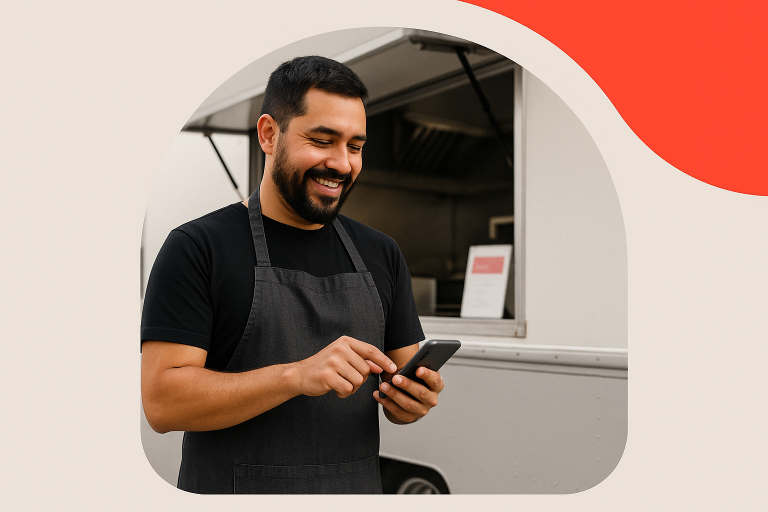
Online Ordering System For Food Trucks
Overview
Running a food truck means staying nimble, your location changes, your crowd changes, and your orders need to keep up. Having a reliable online ordering system for food trucks isn't a luxury; it's what separates trucks that build loyal followings from those that rely entirely on foot traffic. This guide breaks down the key features to look for, the best platforms available as of early 2026, how Square fits into the picture, and how commission-free solutions like Sauce can help you keep more of what you earn.
Best Online Ordering System for Food Trucks
Among platforms built specifically for mobile food businesses, Food Truck Pub (foodtruck.pub) stands out as the most purpose-built option. It was designed exclusively for food trucks, trailers, and carts, and its feature set reflects that focus.
What It Offers
For food truck operators who want a system tailored to their workflow rather than adapted from a restaurant model, it's the most complete dedicated solution currently available.
- An active food truck map showing real-time locations and order statuses
- QR code ordering and direct ordering links shareable via social media or printed materials
- Same-day orders and future pre-orders for events and catering
- Menu import directly from Square or Clover, with order alerts from day one
- Integration with commission-free delivery services like ShipDay
- Built-in loyalty programs and coupon codes
What Users Say
Pros:
Cons:
- Excellent onboarding support, the team reaches out to help configure settings
- Seamless integration with existing payment platforms (Square, Clover, PayPal)
- Real-time notifications via SMS, email, and push alerts keep operations smooth
- Free tier may limit advanced features like reporting and loyalty tools
- Best suited for food trucks specifically, less flexible for other restaurant formats
Food Truck Ordering System: Key Features to Look For
Not every online ordering platform is built with food trucks in mind. A system designed for a brick-and-mortar restaurant won't account for the mobility, limited staff, and event-based scheduling that define food truck operations. Here's what a purpose-built system should include:
- Feature | Why It Matters
- Real-time location mapping | Customers need to find you before they can order. A live map that updates your location is essential.
- QR code and direct link ordering | Contactless ordering via QR codes on your truck, menus, or social posts removes friction and speeds up the line.
- Pre-order and event scheduling | Accept future orders for catering or scheduled stops, synced with a calendar customers can check.
- POS and payment integration | Seamless connection with Square, Clover, or PayPal ensures orders flow directly without manual re-entry.
- Multi-channel notifications | SMS, email, and push alerts so no order slips through during a busy lunch rush.
- Order throttling | Cap orders per time slot to prevent your kitchen from being overwhelmed at peak periods.
- Customer data ownership | Access to emails and phone numbers of your customers so you can market to them directly.
- Loyalty and engagement tools | Coupon codes, loyalty programs, and social media features to drive repeat business.
Square POS System for Food Trucks
Square is one of the most widely used POS and online ordering solutions among food truck operators. It combines payment processing, order management, and hardware in a single ecosystem that's easy to run with a small team.
Key Strengths
For food trucks that want a proven, all-in-one solution with strong hardware support, Square is a dependable choice.
- Offline payment processing, critical when you're parked at a festival with spotty connectivity. Data syncs automatically when the connection is restored.
- Flexible hardware, handheld devices, compact terminals, and tablet stands all work within the same system.
- Built-in tools, QR code ordering, customizable menus, and loyalty features included.
- Third-party integration, connects with DoorDash and Uber Eats to extend your reach without a separate system.
Food Truck POS System Cost
Costs vary significantly depending on the platform and hardware you choose. Here's a general breakdown using common options:
- Cost Category | Typical Range
- Base software fee | $20, $50/month per device
- Square KDS | ~$20, $30/month
- Square Kiosk | ~$30, $50/month
- Hardware (one-time) | Varies by device (Register, Terminal, etc.)
- Per-transaction fees | Platform-dependent
Free Online Ordering System for Food Trucks
Truly free online ordering systems exist, though they come with trade-offs. Food Truck Pub offers free onboarding and entry-level access, making it accessible for trucks just getting started. eHopper provides a free POS tier for qualifying U.S. customers.
The catch with most free tiers: they either limit features (no loyalty programs, no advanced reporting) or offset the cost through transaction fees or commissions on orders.
How Sauce Helps Food Trucks Keep More Revenue
Most third-party delivery platforms charge 20, 30% commission on every order, a margin that's hard to absorb with tight food costs and limited staff. Sauce replaces that with a flat monthly fee and zero commission, giving food trucks full access to a national driver network without surrendering a cut of every sale.
What You Get
- Full ownership of customer data, emails, phone numbers, order history, for your own marketing
- Integration with Toast POS and branded online ordering
- Discovery channel connections including Google and Apple Business Connect
- Automated re-engagement campaigns, SEO optimization, and Google My Business enhancements
What Users Say (Early 2026)
Pros:
Cons:
For food trucks looking to reduce dependency on commission-heavy platforms, Sauce is worth a close look, particularly if you're already using Toast or want to explore the best ordering systems for small restaurants more broadly.
Choosing the right online ordering system for food trucks comes down to matching a platform's strengths to how your business actually operates. If mobility and real-time location features are your priority, Food Truck Pub is the most purpose-built option. If you want a proven all-in-one POS with strong hardware, Square delivers. And if cutting commission fees and owning your customer relationships is the goal, Sauce puts more money back in your pocket on every order.
- "A great time saver" with "much better pricing options than other third-party deliveries"
- Significant cost savings compared to commission-based platforms
- Some users flagged a bumpy onboarding experience initially, though most report issues resolve quickly