

In food service, the line never stops moving.
Tickets fire. Plates land in the pass. Guests wait. Shifts stretch long past their scheduled end.
It’s a culture that rewards resilience, speed, and endurance.
What it rarely rewards is vulnerability.
Behind the line, behind the bar, behind the front desk, many restaurant professionals are fighting battles that customers never see. Burnout, anxiety, depression, substance abuse, and suicidal ideations are part of a quiet crisis in an industry known for grit.
In a culture shaped by sentiments like, if you can’t stand the heat, stay out of the kitchen, there has been little room for struggle.
For far too long, suffering has been chalked up to being “part of the job.”
It doesn’t have to be.

The Scope of the Crisis
Research over the past decade has increasingly shown that food service and hospitality workers experience elevated rates of stress and mental health challenges compared to many other professions. Long hours, physical strain, emotional labor, financial instability, and exposure to alcohol all compound risk.
Public health data has also shown higher suicide rates among food service workers compared to national averages, drawing attention from advocates and mental health organizations pushing the industry to confront the issue directly.
The issue is not isolated to one role.
Line cooks. Servers. Bartenders. Managers. Hotel staff. Owners. The pressures touch every level.


Why Hospitality Is Uniquely Vulnerable
A Culture of Endurance
Hospitality often celebrates toughness.
Call-outs are frowned upon. Mental health days are rare. Pushing through exhaustion is seen as professionalism. Many workers internalize the belief that if they cannot handle the pressure, they do not belong.
That mindset can silence people who need help.
Irregular Hours and Disrupted Lives
Evenings, weekends, holidays. Double shifts. Late closes followed by early opens.
Inconsistent sleep patterns are linked to depression, anxiety, and cognitive strain. Workers often miss family events and social milestones, increasing isolation.
Financial Stress
Tipped wages fluctuate. Hours change with the seasons. Owners operate on razor-thin margins. Economic instability can amplify existing stress and anxiety.
Exposure to Drugs and Alcohol
Alcohol is normalized in many hospitality environments. After-shift drinks, high-stress coping, and easy access to substances can increase the risk of dependency, which often coexists with mental health struggles.
According to the Substance Abuse and Mental Health Services Administration, workers in the accommodation and food services industry have some of the highest rates of substance use disorders of any profession, with nearly one in five workers reporting heavy alcohol consumption.
In environments where alcohol is both a product and a social ritual, the line between coping and dependency can blur quickly.
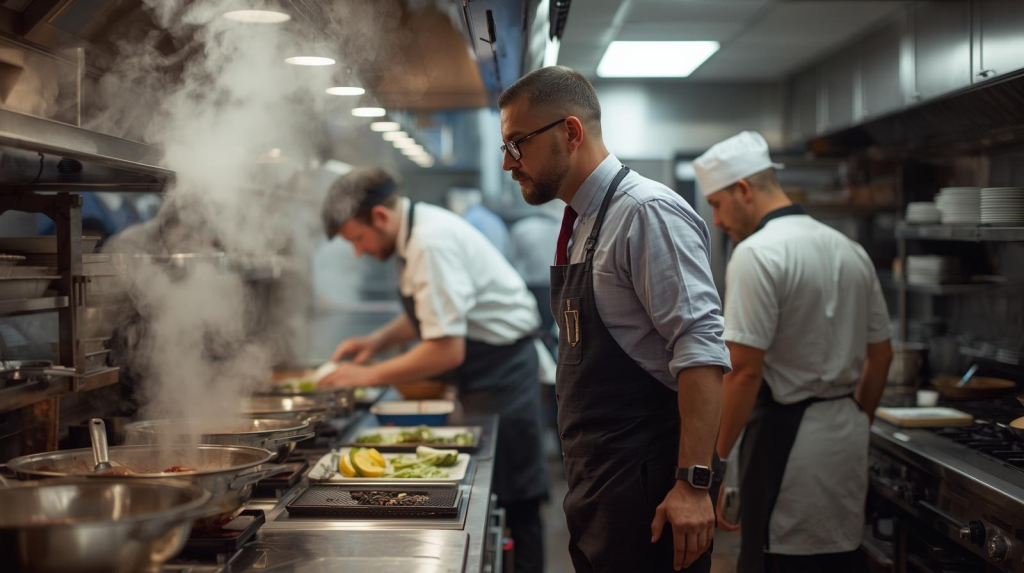 Pressure Cooked: The Human Cost
Behind every statistic is a person: a cook who begins withdrawing from coworkers; a server who stops showing up; a bartender who uses alcohol to self-medicate.
Mental health struggles rarely appear dramatic at first. They look like irritability. Fatigue. Missed shifts. Conflict. Disengagement.
Unchecked, they can deepen.
Silence is dangerous.

Breaking the Silence: Industry Leaders Stepping In
Organizations like the Hospitality Mental Wellness Initiative USA are working to confront the mental health crisis in hospitality directly.
Founded by chef and advocate Vincent A. Tropepe, the initiative focuses on raising awareness, reducing stigma surrounding suicide, addiction, and mental health struggles, and providing education tailored specifically to hospitality professionals.
It was built on a simple but powerful belief: mental health should never be a taboo subject in the hospitality industry.
What started as conversations among industry professionals has grown into a nationwide movement dedicated to creating systemic change. Tropepe believes the industry cannot address the problem without acknowledging the environment workers face every day.
The organization provides practical tools designed specifically for restaurants, hotels, and hospitality businesses. Members gain access to a wide range of resources, including connections to suicide prevention hotlines, addiction recovery organizations, and mental health support services that employees can access confidentially.
One of the initiative’s most visible tools is a workplace poster featuring a QR code that employees can scan to instantly access crisis resources and support services.
The goal is simple.
Make help visible and easy to reach when someone needs it most.
 Hospitality Mental Wellness Initiative USA — Key Facts
About: The Hospitality Mental Wellness Initiative USA is a nonprofit mental health initiative that supports hospitality professionals across all 50 U.S. states.
Sector Focus: Restaurants, hotels, bars, and the broader hospitality industry.
Core Issues: Stigma, addiction, depression, suicide, chronic stress, and burnout.
Website:
https://hmwiusa.org
Mission and Vision
The initiative’s mission is to eradicate stigma surrounding mental health in hospitality and ensure that no professional suffers in silence.
It promotes open conversations, compassion, and support as essential elements of service and professional excellence.
Its vision is an industry where mental health is recognized as fundamental to performance, leadership, and guest care rather than treated as an afterthought.
Programs and Activities
The organization focuses on three primary areas:
- Awareness and education
- Support networks
- Systemic change
It raises awareness of mental health challenges in hospitality, provides industry-specific educational resources, and builds peer support networks designed for restaurant and hospitality professionals.
The initiative also advocates for healthier scheduling practices, workplace policies, and leadership cultures that prioritize well-being alongside productivity and guest satisfaction.

How Restaurants Can Get Involved
Tropepe emphasizes that restaurant owners and operators play a critical role in building healthier workplaces.
National Advisory Board
Restaurant leaders can join the advisory board, which provides guidance to the organization’s board of directors on issues affecting hospitality workers in their local communities.
https://hmwiusa.org/national-advisory-board
National Delegation
Operators who want to take a more active role can participate in the national delegation, collaborating on committees that help develop programming, outreach efforts, and industry advocacy.
https://hmwiusa.org/national-delegation
Membership
Restaurants can join as organizational members based on the size of their staff.
Membership provides access to educational materials, mental health resources, and industry-specific support tools designed for hospitality teams.
Among the most valuable resources is a curated network of support services, including suicide prevention hotlines, addiction recovery organizations, and mental health programs that employees can access privately.
The organization also distributes workplace posters featuring QR codes that employees can scan to instantly connect with crisis support and mental health information.



What Employers Can Do
Change does not require massive budgets. It requires intention.
Restaurant owners, hotel operators, and managers can:
- Normalize conversations about mental health during team meetings
• Share crisis resources openly and visibly
• Train managers to recognize warning signs
• Encourage time off without stigma
• Review scheduling practices to reduce chronic burnout
• Provide access to employee assistance programs where possible
Leadership sets culture.
Culture shapes safety.
What Colleagues Can Do
Peer support is often the first line of defense. And sometimes the most powerful intervention is simple.
- Check in.
- Ask how someone is doing and mean it.
- Notice changes in behavior.
- Avoid jokes that minimize distress.
- Share resources without judgment.
If You or Someone You Know Is Struggling
If you are in the United States and experiencing emotional distress or suicidal thoughts, call or text 988, the Suicide & Crisis Lifeline.
If you are in immediate danger, call 911 or seek emergency medical care.
Organizations such as the Hospitality Mental Wellness Initiative USA also provide industry-focused education and support.
Asking for help is not about weakness.
It’s about survival.
Additional Resources
National Alliance on Mental Illness (NAMI)
https://www.nami.org
The Trevor Project (LGBTQ+ Crisis Support)
https://www.thetrevorproject.org
Depression and Bipolar Support Alliance (DBSA)
https://www.dbsalliance.org
Trans Lifeline
https://translifeline.org
National Eating Disorders Association (NEDA)
https://www.nationaleatingdisorders.org
988 Suicide & Crisis Lifeline
https://988lifeline.org
SAMHSA — Substance Abuse and Mental Health Services Administration
https://www.samhsa.gov
Advocacy and Industry Change
Because hospitality challenges vary widely across the country, the organization divides the United States into four regional districts.
The pressures facing restaurant employees in Los Angeles may differ greatly from those in smaller markets or rural states. Regional insight ensures solutions reflect the realities workers face on the ground.
Beyond education and resources, the initiative is also working toward broader industry protections.
Tropepe has begun advocating for legislative measures designed to protect hospitality workers who seek mental health support and ensure they cannot face workplace discrimination.

Building Community Through Hospitality
Raising awareness is another key part of the organization’s mission.
Across the country, the initiative hosts collaborative fundraising dinners that bring chefs together to create multi-course tasting experiences.
These events generate funding for mental health programs while reinforcing the sense of community that has always defined hospitality.
For Tropepe, the goal is not simply to acknowledge the problem.
It is to change how the industry responds to it.
No one working in hospitality should feel that suffering in silence is part of the job.

Take Away
Hospitality thrives on service. On showing up. On taking care of others.
It is time the industry takes care of its own.
Behind every perfectly plated dish and polished guest experience is a human being.
Protecting their mental health is not a luxury.
It is a responsibility.
The line will keep moving.
