
Sauce Blog
Is DoorDash Worth It for Restaurants
January 26, 2026
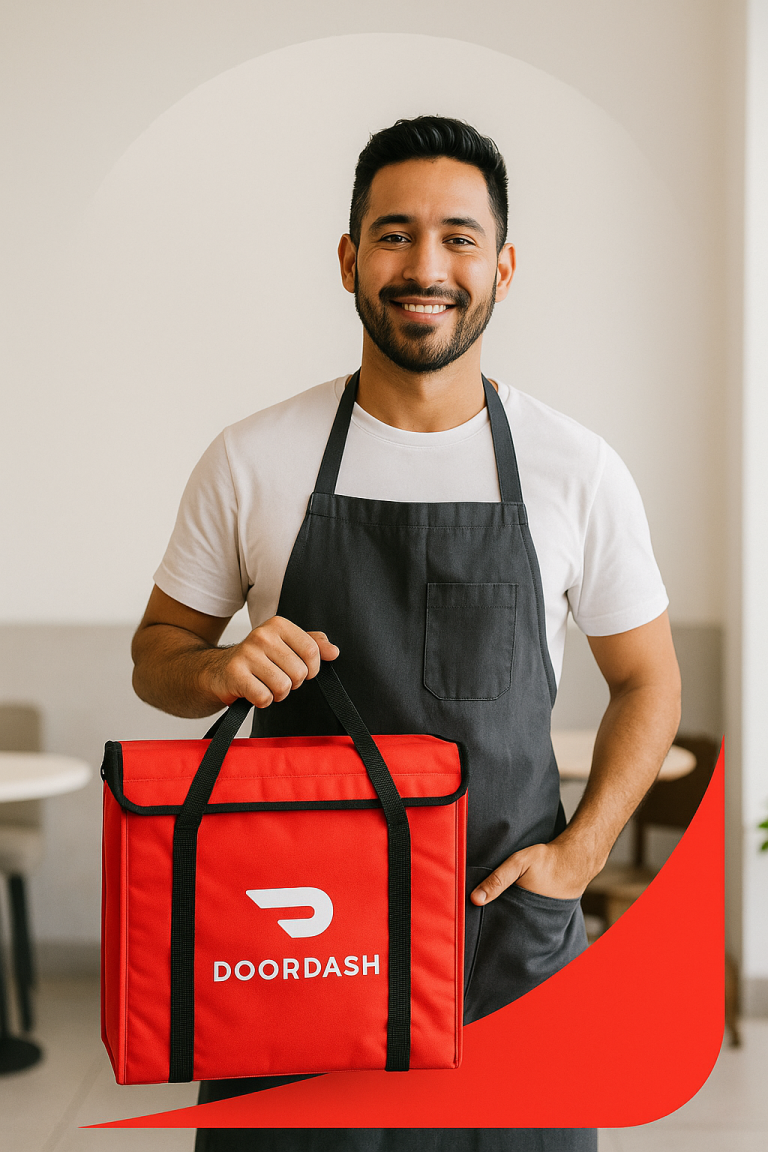
Is Doordash Worth It For Restaurants
Overview
Every restaurant owner considering third-party delivery eventually asks the same question: is DoorDash worth it for restaurants? The platform commands roughly 67% of the U.S. online food delivery market as of early 2026 and reaches millions of diners daily. But market dominance doesn't automatically translate into profitability for the restaurants powering those orders. Before signing up, it's worth understanding exactly what DoorDash costs, what it offers, and whether the math actually works in your favor.
- Feature | Details
- Commission Range | 15% (Basic) to 30% (Premier) per delivery order
- Market Share (U.S.) | ~67% of online food delivery
- Support | 24/7 phone, live chat, email, Merchant Portal
- Key Benefit | Massive customer reach and built-in marketing exposure
- Key Risk | High commissions that erode thin restaurant margins
The Real Cost: What Restaurant Owners Are Saying
The financial reality of DoorDash becomes clearest when you look at how restaurants actually respond to the commission structure. A common pattern: restaurants raise their DoorDash menu prices by 15, 30% to offset commissions, making delivery prices noticeably higher than in-store prices. This creates friction with customers who feel overcharged, and it can damage a restaurant's reputation even when the restaurant itself is simply absorbing the platform's fees.
Who Benefits, and Who Doesn't
If you're in the lower-ticket category and looking for ways to reduce the financial impact, these strategies for reducing DoorDash fees offer practical options worth considering.
- Operators with higher average order values and strong brand recognition tend to fare better, since the fixed percentage hurts less on larger tickets.
- Restaurants needing quick volume and visibility can use DoorDash as a customer acquisition channel.
- Fast-casual spots with $10, $15 average orders often find the math nearly impossible without raising prices significantly or accepting a loss on every delivery.
- Restaurants that rely on repeat customers lose out, since DoorDash retains the customer data and relationship.
DoorDash Commission Fees for Restaurants
The commission rate depends entirely on which pricing plan you choose. DoorDash offers three tiers:
On a $40 order, DoorDash takes between $6 and $12 depending on your plan, before you've accounted for food costs, labor, or packaging. For restaurants operating on margins of 5, 15%, even the Basic Plan can be painful. The higher tiers offer greater marketplace visibility and promotional placement, but the trade-off is steep. Many operators face a difficult choice: opt for lower commission and sacrifice exposure, or pay more and hope volume compensates. For a deeper breakdown, this analysis of DoorDash fees for restaurants is worth reviewing.
- Plan | Commission | What You Get
- Basic | 15% | Standard marketplace listing
- Plus | 25% | Access to DashPass customers, greater visibility
- Premier | 30% | Maximum exposure, guaranteed minimum of 20 orders/month
How the DoorDash Merchant Platform Works
Beyond commissions, DoorDash offers a comprehensive merchant toolkit. Restaurants can integrate orders with existing POS systems like Square, Toast, or Deliverect, or manage incoming orders through the DoorDash Order Manager app.
Key Operational Features
Promotional tools, including sponsored listings and special offers, are available to boost visibility within the app. For restaurants that want to drive direct orders while still tapping into DoorDash's driver network, options like DoorDash Drive On-Demand and Self-Delivery allow more operational flexibility without fully surrendering control.
- Confirm orders, adjust prep times, and update menu availability in real time
- Pause order intake during rushes
- Built-in communication with drivers and customers to reduce hand-off friction
- Analytics through the Merchant Portal: sales data, order accuracy, customer feedback, and financials
DoorDash vs. Uber Eats vs. Grubhub for Restaurants
Comparing DoorDash against Uber Eats and Grubhub reveals meaningful differences that should factor into your decision.
DoorDash's ~67% domestic market share and nearly 19 million app downloads make it the strongest choice for U.S. reach. Uber Eats wins on international exposure. For a detailed side-by-side look, see this comparison of DoorDash vs. Uber Eats for restaurants.
- Factor | DoorDash | Uber Eats | Grubhub
- Starting Commission | ~15% | ~15% | ~5, 10% (Direct plan)
- U.S. Market Share | ~67% | Smaller domestic share | Strong in key urban markets
- Global Reach | Primarily U.S. | 45 countries, 6,000+ cities | U.S. focused
- Customer Data | Limited | Limited | Some data ownership + website tools
DoorDash Restaurant Support: What to Expect
DoorDash performs reasonably well on merchant support. Here's what's available:
It's a solid support infrastructure, though restaurant owners on forums frequently note that response times during peak periods leave something to be desired.
- Phone (24/7): U.S. partners call 855-222-8111 (English and Spanish), with separate lines for Canada, Australia, and New Zealand. Have your store name, ID, and address ready.
- Live chat: Available through the Business Manager App and DoorDash Tablet for active orders.
- Email: merchant@doordash.com for general account and menu questions; dosupport@doordash.com for Drive On-Demand integration issues.
- Merchant Portal Help Form: Recommended for account-level problems like banking or login difficulties.
A Commission-Free Alternative Worth Knowing About
For restaurants that want delivery without surrendering 15, 30% of every order, Sauce offers a fundamentally different model. Rather than charging a percentage commission, Sauce operates on a transparent flat-fee structure, meaning your margins stay intact regardless of order size. Sauce connects your direct online orders to a national network of delivery drivers, giving you the logistics infrastructure of a major platform without the marketplace tax.
Critically, Sauce also returns something DoorDash never will: your customer data. Every order placed through your Sauce-powered direct channel belongs to you, names, emails, order history, giving you the foundation to build loyalty programs, run targeted promotions, and own the customer relationship long-term.
So, Is DoorDash Worth It for Restaurants?
The honest answer depends on your margins, your average order value, and what you're trying to achieve. DoorDash delivers undeniable reach, no other U.S. platform comes close, and its merchant tools are genuinely functional. But treating it as a long-term profit driver is where many operators run into trouble. The commission structure, the lack of customer data ownership, and the pressure to inflate menu prices all compound over time. Is DoorDash worth it for restaurants as a standalone delivery strategy? For most, the answer is no. As one piece of a broader approach, paired with a direct ordering channel that actually protects your margins, it can make more sense.