Beyond the Brackets: Three-Week March Madness Restaurant Delivery Strategy
With the nation’s sports fans glued to their screens during the 2026 NCAA Men’s Basketball Tournament, March Madness remains one of the biggest food delivery moments of the year. Second only to football’s championship Sunday, the “Big Dance” drives three straight weeks of high-volume orders, repeat visits, and group-sized baskets.
But in 2026, success is not just about being busy.
It’s about driving first-party orders, protecting margins, increasing average ticket size, and turning one-time visitors into loyal customers.
The 2026 NCAA March Madness tournament begins with Selection Sunday on March 15, leading into the First Four on March 17-18. Rounds 1 and 2 take place from March 19–22, followed by the Sweet 16 and Elite Eight on March 26–29. The Final Four and National Championship are in Indianapolis on April 4 and 6, 2026.
With nearly a month of opportunity to score orders, now is the time to build your game plan.
2026 Tournament Schedule
- Selection Sunday: Sunday, March 15
- First Four: March 17-18
- First round: March 19-20
- Second round: March 21-22
- Sweet 16: March 26-27
- Elite Eight: March 28-29
- Final Four: April 4 at Lucas Oil Stadium in Indianapolis
- NCAA championship game: April 6 at Lucas Oil Stadium in Indianapolis
Three weeks. Multiple ordering peaks. Built-in repeat occasions.
March Madness is not a single spike. It is a three-week revenue cycle with different opportunities during each phase.
Click Here for a Downloadable Interactive Bracket
Week-by-Week Restaurant Delivery Strategy for the Big Dance
Restaurants that treat March Madness like a three-week campaign, not a one-night event, see new customers, higher repeat rates, and larger basket sizes.
Week 1: Selection Sunday + Opening Rounds = Customer Acquisition
What’s happening:
- High energy
- Bracket parties
- Large group orders
- Impulse ordering
- First-time orders
Strategies:
- Push family packs and bundle deals
- Promote group-sized carts
- Run limited-time “tournament kickoff” promos
- Capture emails or loyalty sign-ups
- Make sure operations are tight because first impressions matter
Week 2: Sweet Sixteen + Elite Eight = Customer Retention
What’s happening:
- Fewer games
- More emotionally invested viewers
- Smaller, more focused watch groups
- Repeat ordering potential
Strategy angle:
- Retarget Week 1 customers
- Send reminder emails or SMS before game nights
- Promote bounce-back offers
- Highlight top-selling items from Week 1
Week 3: Final Four + Championship = Optimization
What’s happening:
- Peak Visibility
- Big gatherings
- Higher per-order spend
- Last chance to capture revenue
Strategy angle:
- Premium bundles
- Upsells and add-ons
- Pre-order promotions
- “Last Game of the Season” messaging
- Encourage scheduling orders in advance
2026 Delivery Strategy: What’s Different This Year
March Madness traffic is predictable. Profitability is not.
In 2026, operators are navigating tighter margins, higher labor costs, and more value-conscious consumers. Guests are still ordering for watch parties. They are simply looking for the best bang for their buck.
That means:
-
Inflation-Conscious Bundles
Guests are comparing prices, so make it easy for them. Instead of discounting individual items, build bundled watch-party packs:
- Family Pack: 2 pizzas + wings + 2-liter soda
- Four-Friends Bundle: 20 wings + loaded fries + dip sampler
- Final Four Feast: Large tray entrée + 2 apps + dessert
Bundling protects margin, increases ticket size, and simplifies decision-making during high-intensity games.
-
Watch-Party Packs
March Madness is not a solo viewing event.
Create:
- “Sweet 16 Snack Pack”
- “Elite Eight App Platter”
- “Final Four Feast”
- “Championship Combo”
Position these bundles prominently on your online ordering page. Make them one-click easy.
If customers have to build a cart from scratch, you lose momentum.
-
First-Party Ordering
Tournament spikes are the perfect time to shift behavior.
When guests order directly through your website:
- You protect your margins
- You control the customer relationship
- You capture and keep valuable data
- You hang on to your hard-earned profits
The goal is not just one March order. It is long-term loyalty.
With Sauce’s easy-to-use platform, which combines premium commission-free delivery, advanced logistics, and a seamless guest experience, your customers can place pickup or delivery orders directly through your branded website – no middleman or hefty fees – helping you grow sales, retain customer data, and build loyalty on your own terms.
Bracket Promotions That Drive Repeat Business
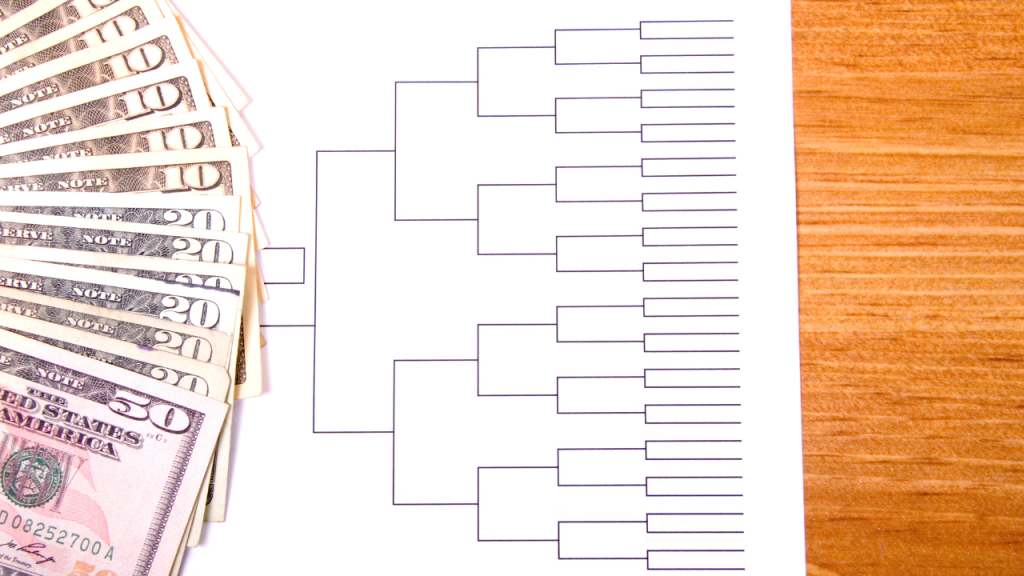
Brackets are still powerful. But in 2026, they should drive data and repeat orders.
-
Host a Delivery Bracket Challenge
Invite customers to:
- Fill out a digital bracket on your website
- Enter their email to participate
- Receive a small incentive for signing up
Prize ideas:
- Free watch-party pack
- $50 gift card
- Free appetizer with next direct order
Every entry builds your owned audience.
-
Create a Menu Madness Bracket
Instead of teams, let menu items go head-to-head.
Round 1: Wings vs. Sliders
Round 2: Nachos vs. Loaded Fries
Final Round: Fan Favorite
Customers vote weekly. Each vote requires an email.
Then promote the winning item with a limited-time offer during the next round.
This creates repeat ordering momentum across all three weeks.
2026 Delivery Trends During March Madness
Here’s what restaurants are seeing this year:
1. Earlier Ordering Before Tipoff
Customers are ordering 30–60 minutes before games start to avoid delivery delays. Promote “Order Before Tip Off” reminders.
2. Larger Group Carts
Average tickets increase during the Sweet 16 and Final Four weekends. Position high-value bundles prominently.
3. Value Over Flash
Guests are skipping gimmicks and looking for generous portions and clear savings.
4. Mobile-First Decision-Making
Most tournament orders are placed from phones while customers are watching pregame coverage. Your online menu must be fast, simple, and bundle-forward.
5. Loyalty Enrollment Spikes
Game-day incentives drive email signups and repeat behavior if positioned correctly.

Plan Your Tournament Social Media Now
Don’t wait until Final Four weekend to start posting. By then, you may be too late.
March Madness is a three-week conversation and your marketing should move with it.
Start early
- Selection Sunday “bracket reveal” posts
- First Round bundle reminders
- Sweet 16 limited-time specials
- Countdown graphics leading into the Final Four
Post More than Promos
- Polls asking who is advancing
- “Menu matchups” between your top sellers
- Behind-the-scenes prep on busy game nights
- Customer watch-party photos
Add an “Order” Button
While it’s important to make your content fun, timely, and shareable, what’s most important is that every post leads to your direct ordering page.
Visibility is nice. Ownership is better.
Check out our article: How to Add the “Order Food” Button to Your Restaurant’s Instagram & Facebook to learn more!
Promote Beer Delivery (If You Offer It)
If your state permits alcohol delivery, March Madness is one of the most profitable add-on windows of the year.
Think:
- Beer and wing bundle pricing
- “Game Night Six Pack” add-ons
- Pre-built beverage pairings that match your top sellers
Don’t make customers search for it.
Make it obvious. Make it one click. Promote it all over social media.
Takeaway
March Madness will bring volume. It always does.
But in 2026, the restaurants that truly win are not just busy. They are intentional. The real reward of this three-week surge is not just sales. It is customer ownership. It’s about:
- Regaining control of customer relationships
- Building bundles instead of discounts
- Promoting direct ordering consistently
- Capturing customer data
- Creating bounce-back offers that extend beyond the tournament
- Positioning your online storefront as the go-to game-day destination
Three weeks of great college basketball can fuel months of repeat business if you play the long game and treat the tournament as more than a spike. It is an opportunity to drive online orders, strengthen retention, and turn first-time customers into regulars.
The games will end.
The customer relationship does not have to.
by Eileen Strauss